 My work in World of Warcraft offers a sustained form of peace activism that repurposes a war-centered game as a site of protest, dialogue, and alternative social practice. Through in-game performances, marches, and machinima, I challenge the normalized logic of endless violence.
In the past, I’ve collaborated with the Third Faction to question the binary of the Horde–Alliance divide and to co-invent quests that promote neutrality, cooperation, and player solidarity. I’m also a past member of the WoW-based guild, Peace Corps, where peace-oriented values were embedded into game play through a commitment to nonviolent questing. By working across protest art, organized movements, and guild life, I try to demonstrate how virtual worlds can become platforms for critique and advocacy, and I enjoy transforming Azeroth from a battlefield into a space for resistance.
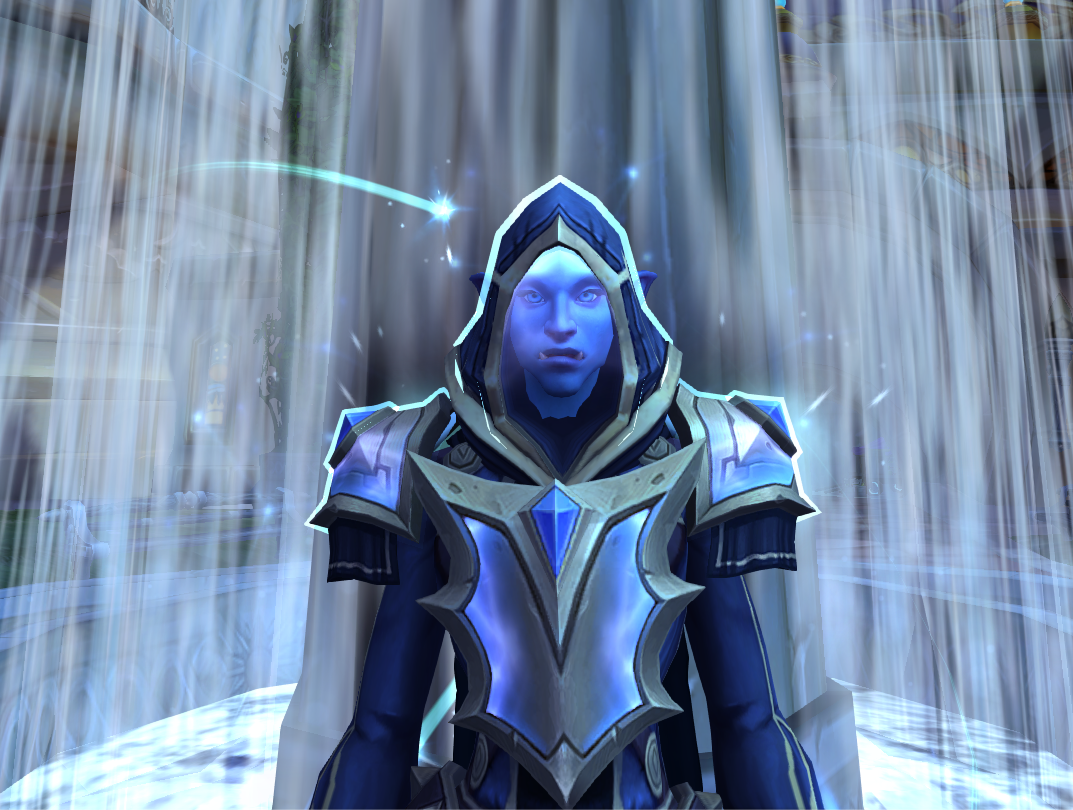
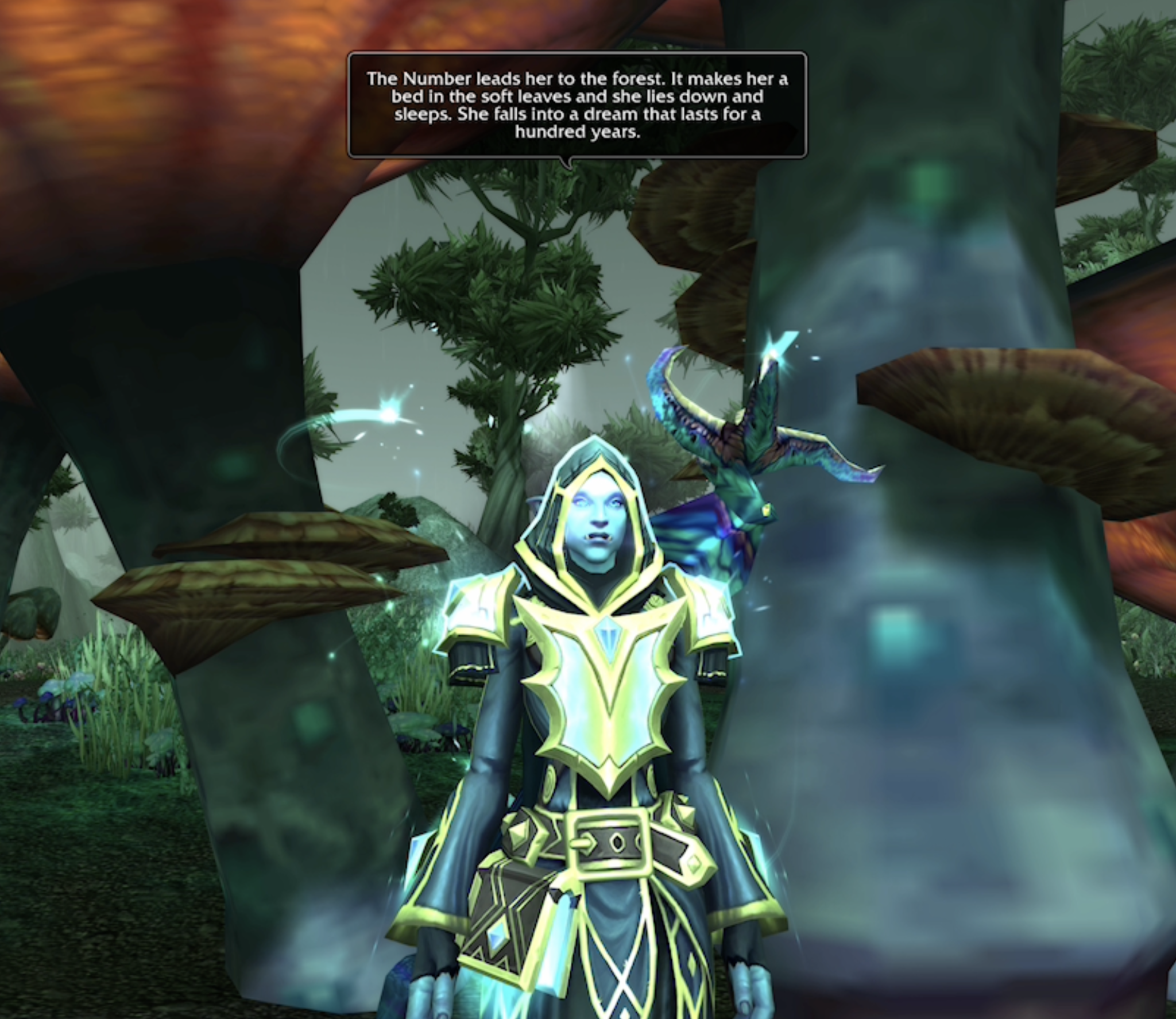
I continue to intervene in the MMORPG of World of Warcraft. Currently, I’m presenting pop-up story readings around Azeroth as part of the Nature, Human – Adventures in Performance project.
Machinimas and documentation from my activities in World of Warcraft have been exhibited at ISEA, Istanbul; The Laguna Art Museum; Odyssey, Exhibit A.
Why Wow? Here’s a reflection on that:
“There are still a couple of old school virtual worlds/games where I like to intervene and World of Warcraft is one of them. Playing the game itself is fun, but WoW is practically begging to be interrogated. For one thing, WoW is built around a binary system that mirrors the real-world logic of war: a constant “us versus them” divide embodied by the two opposing sides—Horde and the Alliance. When a player creates a character, the game’s rules require choosing a faction, which locks players into opposing identities, narratives, and social spaces. This enforced factionalism reduces a complex world into two mutually hostile camps, normalizing conflict as the default state and discouraging ambiguity, neutrality, or coalition. It’s a pretty old-fashioned practice now, but I still get off on examining and disrupting this game, because binaries like this don’t just structure game play; they shape how players (people) think about loyalty, enemies, and otherness. Challenging the embedded “us versus them” mentality, even in a virtual world, opens space for imagining alternatives to perpetual conflict—cooperation across borders and boundaries, and more nuanced ways of understanding power and identity.”